Pico Veleta: How not to bonk on a 40 km climb
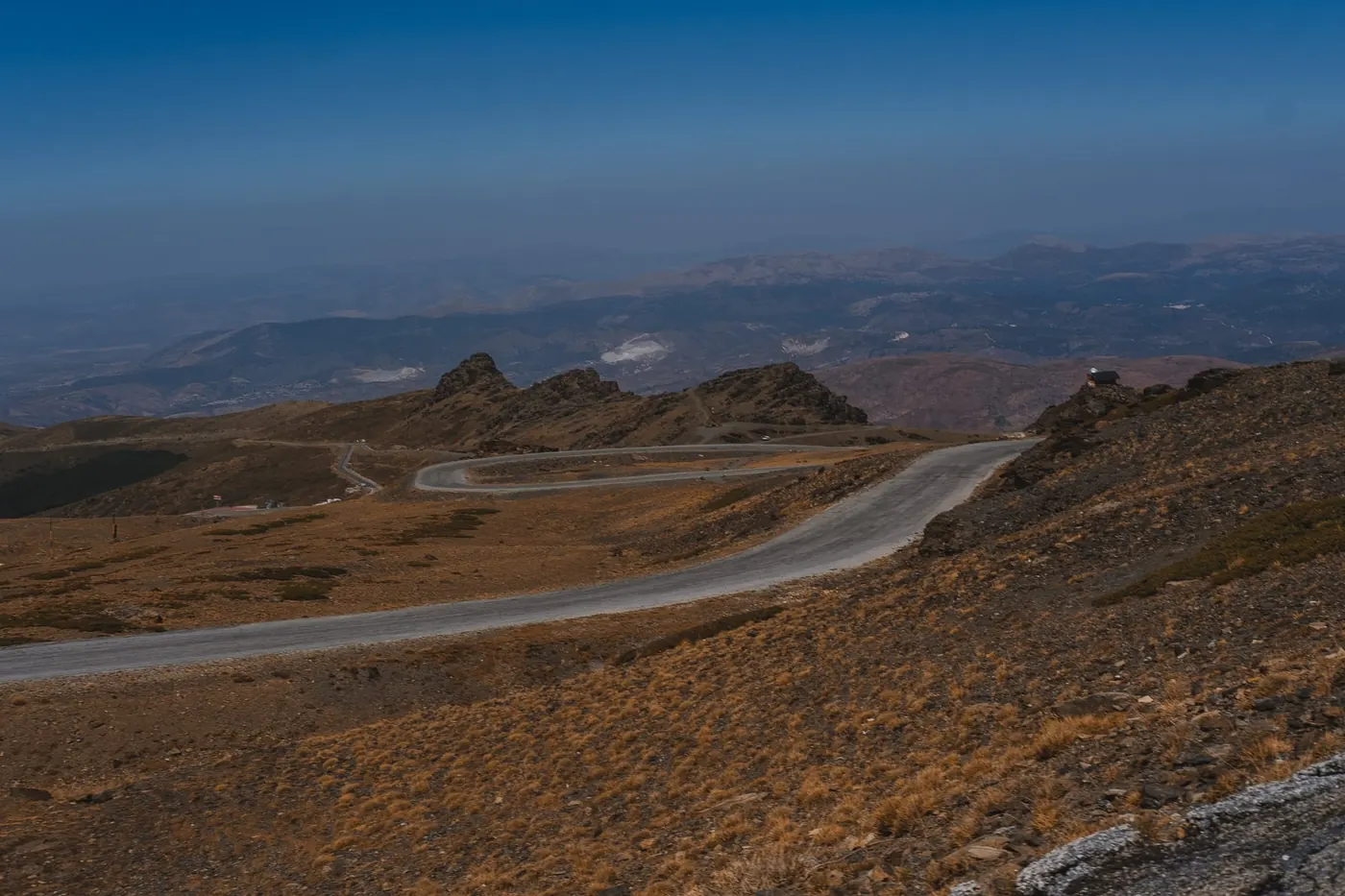
Some climbs you do for the view. Others for the training. Pico Veleta in Sierra Nevada is one of those you do for yourself. The longest continuous road cycling climb in Europe. No cafés, no spectacles, just yourself. Once you’re up on a mountain this big, only your good planning stands between you and bonking.
I like to think that I’ve got my on-bike nutrition in check. While fueling remains a highly individual question, there are some golden tips I need to keep reminding myself of. We climbed Pico Veleta earlier this week, and here is the story of How Huesitos Saved My Ride.
First - About Pico Veleta:
Summit: 3,398 m
Third highest peak on the Spanish mainland
Total ascent from Granada: 43 km
Route taken: from Güéjar Sierra, less ridden and irregular side: 40+ km
With such a long climb ahead, we knew we’d burn a lot of calories. Climbs demand more power, and your body naturally needs more fuel. We packed just enough, planning to stop for lunch in one of the villages before Güéjar Sierra. But every café was closed, so we carried on, hoping it would be enough.
Good to know, the roads in this area are lined with water springs. I tend to drink more than most people, so this was a lifesaver. I hadn’t brought my biggest bottles, trying to keep the bike light, but even so, I never ran short on water.
Another thing to remember is electrolytes. Another very individual element of nutrition. I know I am someone who needs to watch them otherwise a man with a hammer and black scenes in front of my eyes come. On the other hand, Julian and Rianne seem not to need them as much. This is a very subjective matter – you can watch how much you sweat, pee, drink, how much salt is on your clothes in your sweat and it all can give you an idea. The only proper way of finding out how much electrolytes you lose during an activity is a sweat test. For me, I did not feel the need yet, I just take an extra electrolyte tablet for every hour of riding in warm conditions. This is on the top of electrolytes already contained in my drink or gels.
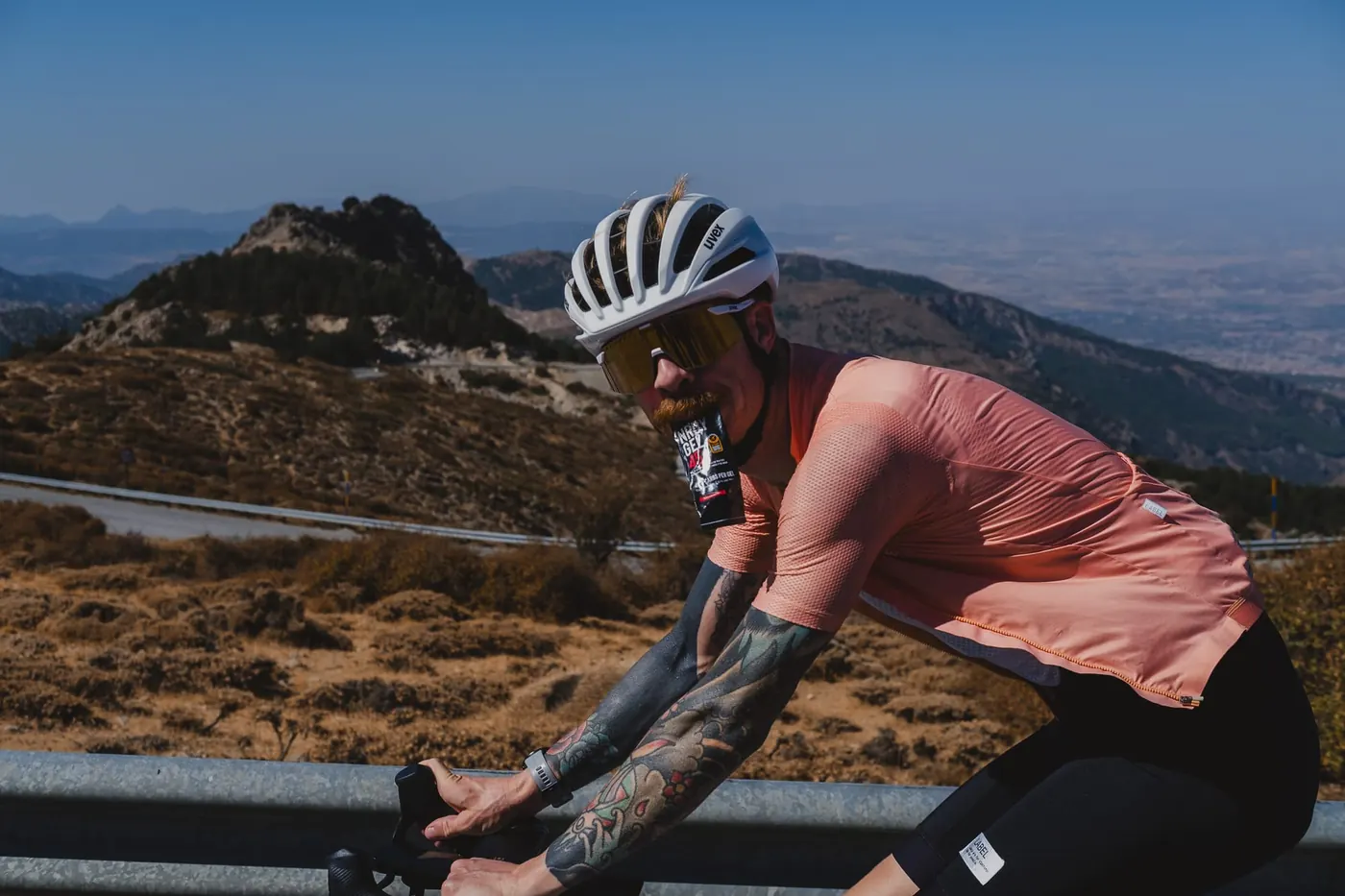
As we were approaching 2500 m, I went through the last gel I was saving for the last bit. To make matters worse, I half spilled it all over my bike and knew I would not have enough nutrition to get to the top. But stopping the climb after almost 30 km was a no-go, so we quietly carried on.
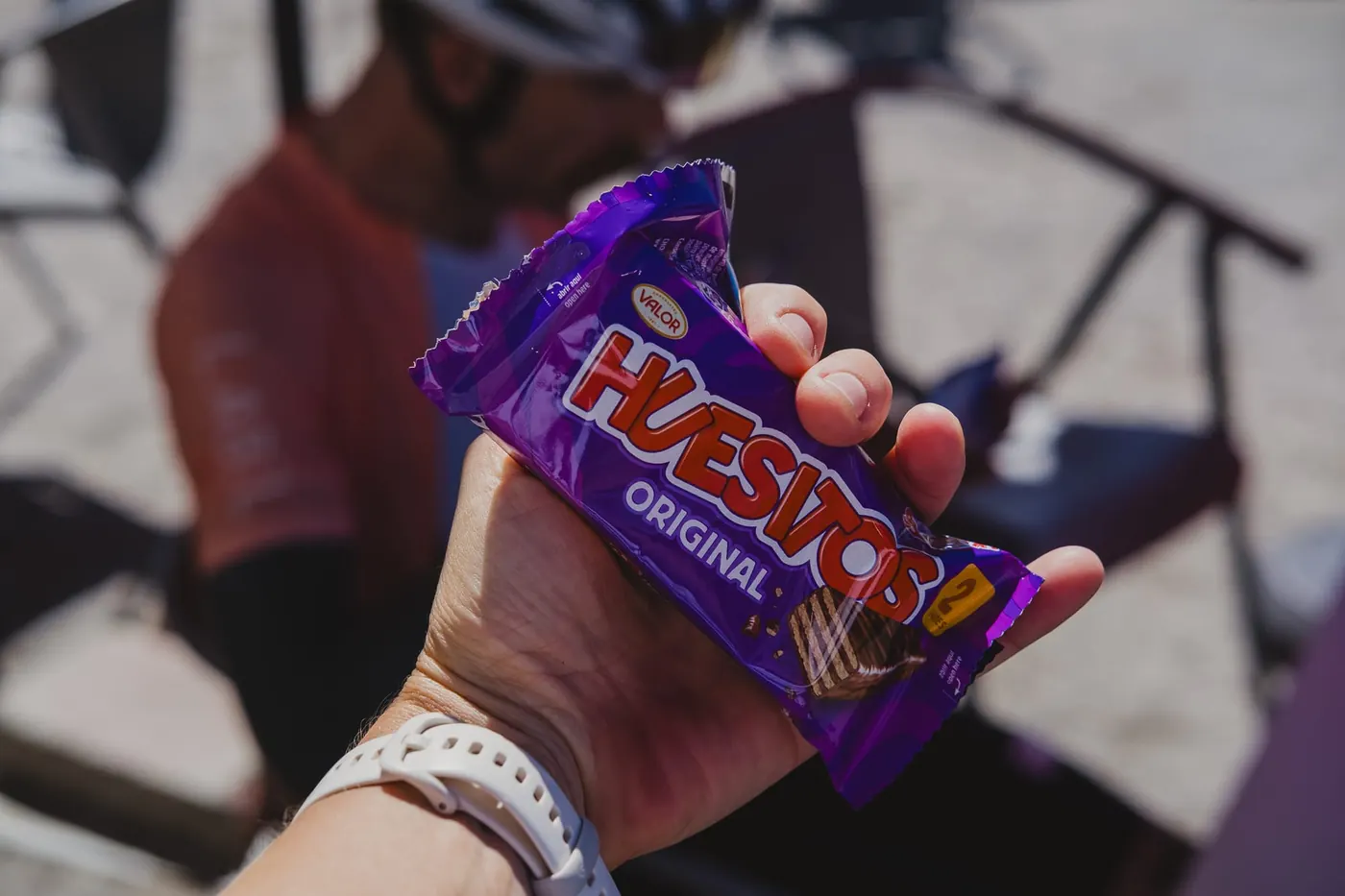
To our great joy, at about 2600 m, by a large parking place that marked the cut off for cars, we found several little snack places. We topped up on drinks, some Coke, I had an Aquarius to top up my electrolytes again. When I got to the little bar, I would eat anything they had. And the kind Spaniard only had Huesitos, essentially a waffled chocolate bar. Not a typical food I would take, but at this point they were worth gold. I ate one portion, still hungry, so my reserve Huesito also went down. Now I felt great again. I took a third, emergency Huesito in my pocket and all of us feeling better after some food and sugar, we carried on.
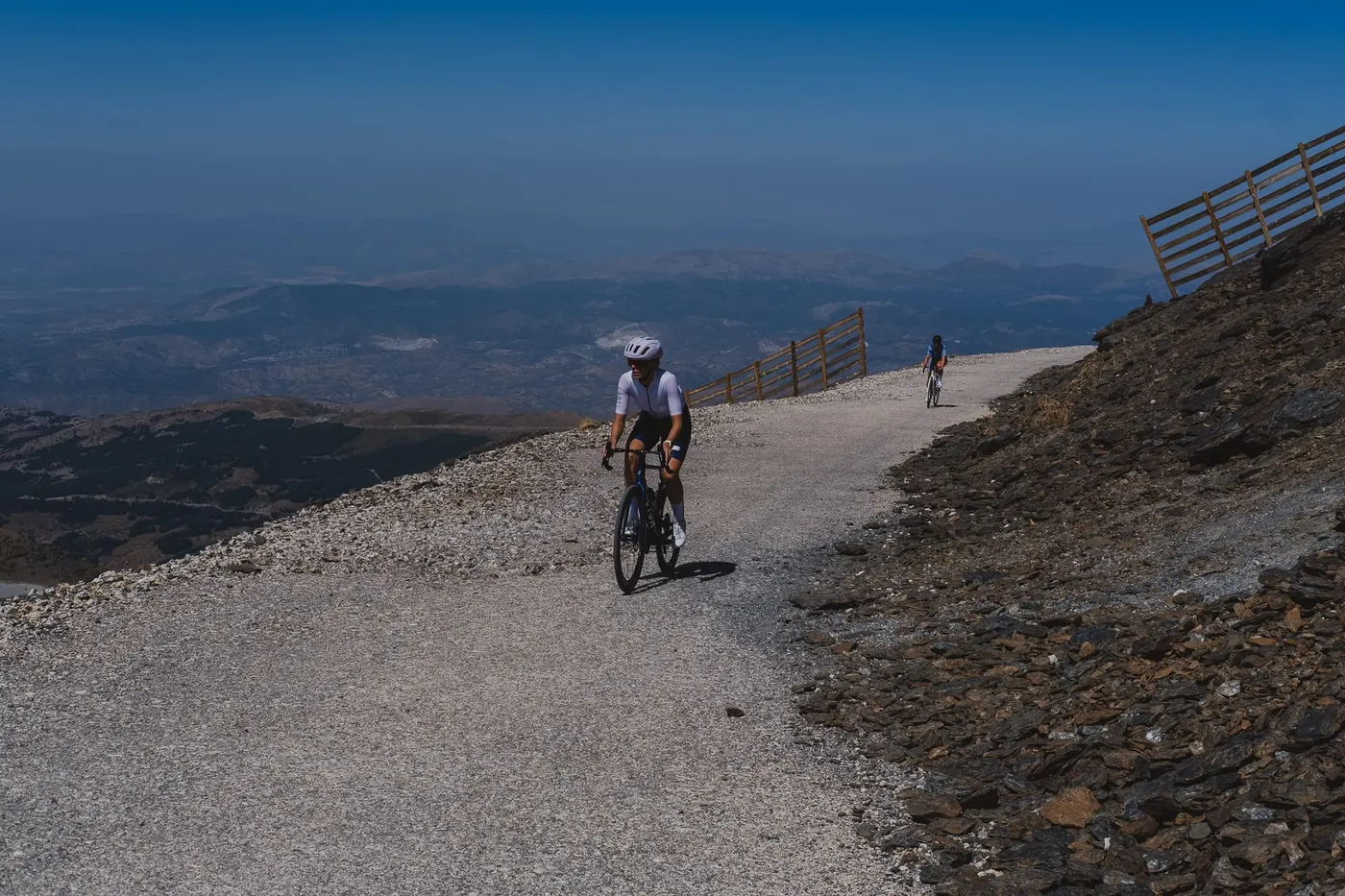
The rest, remaining 10–13 km on increasingly rough road surface, went great nutrition-wise. I have never been this high on a bike and expected to notice altitude right away. But to my surprise, legs felt great, my heart rate stayed normal. Probably the only effect of altitude I noticed was a light headache.
The last 5 km of the climb became increasingly difficult as the road surface broke down. We were ready for it but approached the holes and rocks with respect. My friend Livia had warned me that the very last stretch was a rock garden, and she was right. You can’t miss it - the road simply disappears, and the only bike I’d take there is a mountain bike.
We stopped about 200 m below the summit, at around 3200 m, and it still felt incredible. The top is covered in dark, flaky schist, a stone crumbles into sharp, loose pieces mixed with big blocky chunks. On top of that, the summit has been carved by ancient glaciers, leaving behind piles of gravel and scattered boulders. It felt like we had landed on the moon, and I loved it. The raw beauty, the silence, the absence of restaurants or crowds. It made the moment even more special.
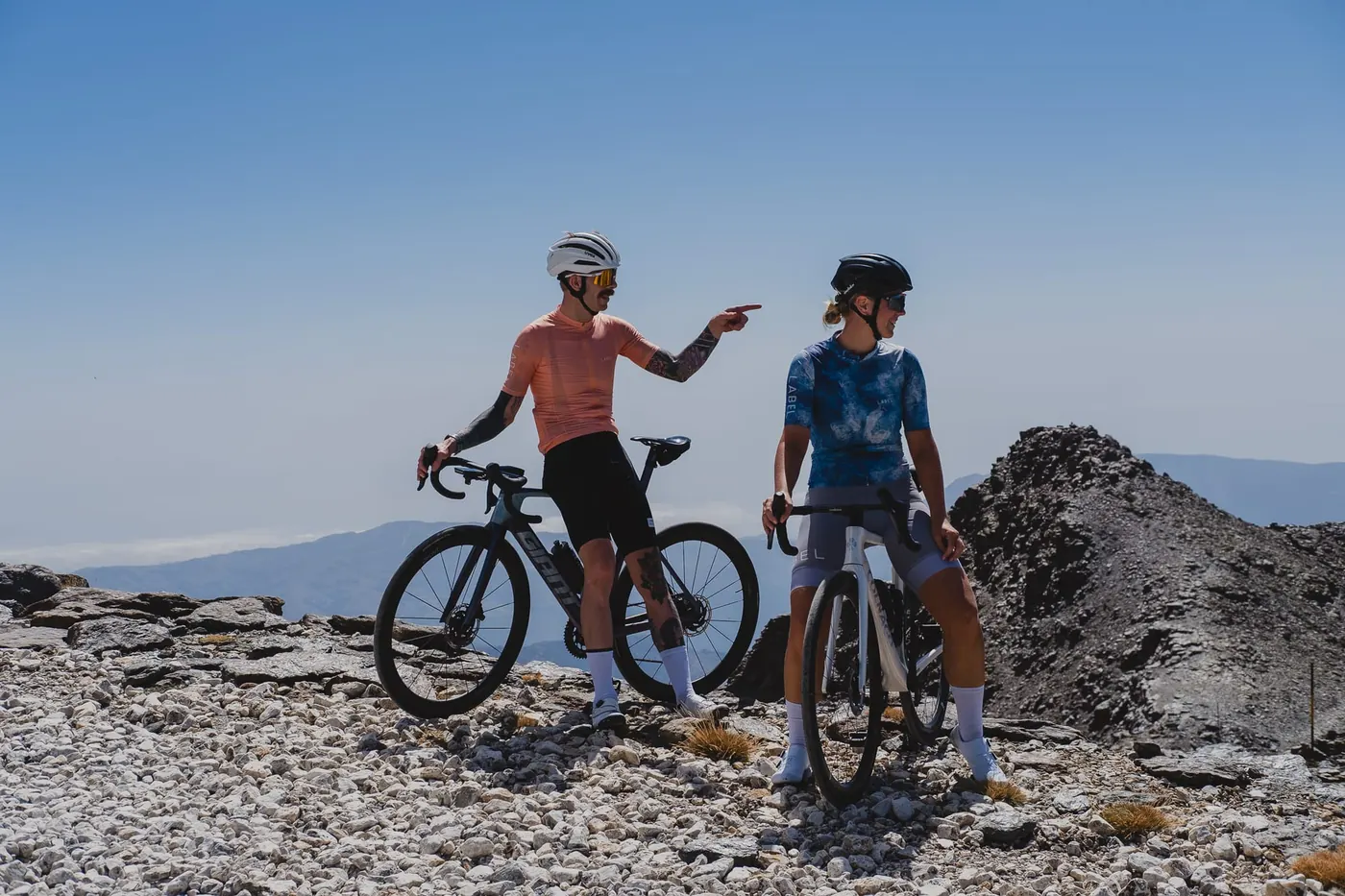
On the way down, all I could think about was solid, savoury food and heaps of vegetables. It’s funny how, in the middle of a tough ride, chocolate bars and Coke suddenly become a precious source of carbohydrates. I wouldn’t say there are good or bad foods, just the right food for the occasion. And on this climb, Huesitos saved the day.
Pico Veleta Road Conditions:
Start of the climb, 40+ km to go: There are a couple of ways to get there, we did it from Güéjar Sierra and it was 40+ km. The roads up to 2600 m, from several directions are in very good condition.
Altitude 2600 m, 13 km to go: There is a barrier “at Hoya de la Mora”. Beyond this barrier, motorised traffic is mostly not allowed. Bikes luckily are, and the last 13 km to the summit awaits.
Altitude 2900 m, 8 km to go: Mixed but largely rideable, rough concrete service road, though with increasing roughness. The road surface is still good, after that the number of cracks and potholes becomes more numerous. In some places, it's hardly possible.
Altitude 3050 m, 5 km to go: Around this mark, the quality of the concrete degrades significantly. There are many large holes, gravel and rocky sections. It’s still passable on a road bike, but you’ll be dealing with poor surface, requiring caution.
Altitude 3300 m, the last 200 m: The road is completely replaced by a rock garden. Definitely not advisable on a road bike without a serious risk of damaging your wheels or bike, which we did not want to take.
Nutrition Tips: What the Science Says
Riding at 3,000 m adds extra stress on your body. Less oxygen means you work harder just to breathe. Here’s what studies and experts suggest:
Higher fluid needs: Dry mountain air and faster breathing mean you dehydrate quickly. Drink 25 - 50% more than usual. Small sips, often.
More electrolytes: Replace sodium, potassium, and magnesium. Sweaty jerseys with salt marks are your clue.
Carbs matter more: At altitude your body leans heavily on carbs. Intake should be higher - gels, bars, even sugary snacks.
Appetite dips, burn rises: Don’t trust hunger cues. Fuel anyway, and more than normally. Liquid calories can help if you struggle with solid food.
Acclimatisation counts: A day or two up high helps your body adapt. If not, expect higher heart rate and lower power at the same effort.
Climbs like Veleta are not about watts per kilo or Strava segments. They’re about managing yourself for hours when the mountain keeps changing the rules. For me, it wasn’t the gradient or length that nearly broke me. It was a closed café, skipped lunch and an empty pocket of gels.
In the end, it was Huesitos that saved the ride. And that’s the lesson: you can train all you want, but sometimes the difference between bonking and finishing is simply what you put in your jersey pocket. From now on, I will always take extra emergency food.