The Psychology of a Late Bid: What Going Pro at 36 Teaches You About Grit and Identity
Turning pro at 36 is not really about age, it is about deciding what kind of person you want to be when the odds are no longer stacked in your favour. It forces you to renegotiate what grit, ambition and progress mean when you already have a life, a history and a version of yourself that people think they know.
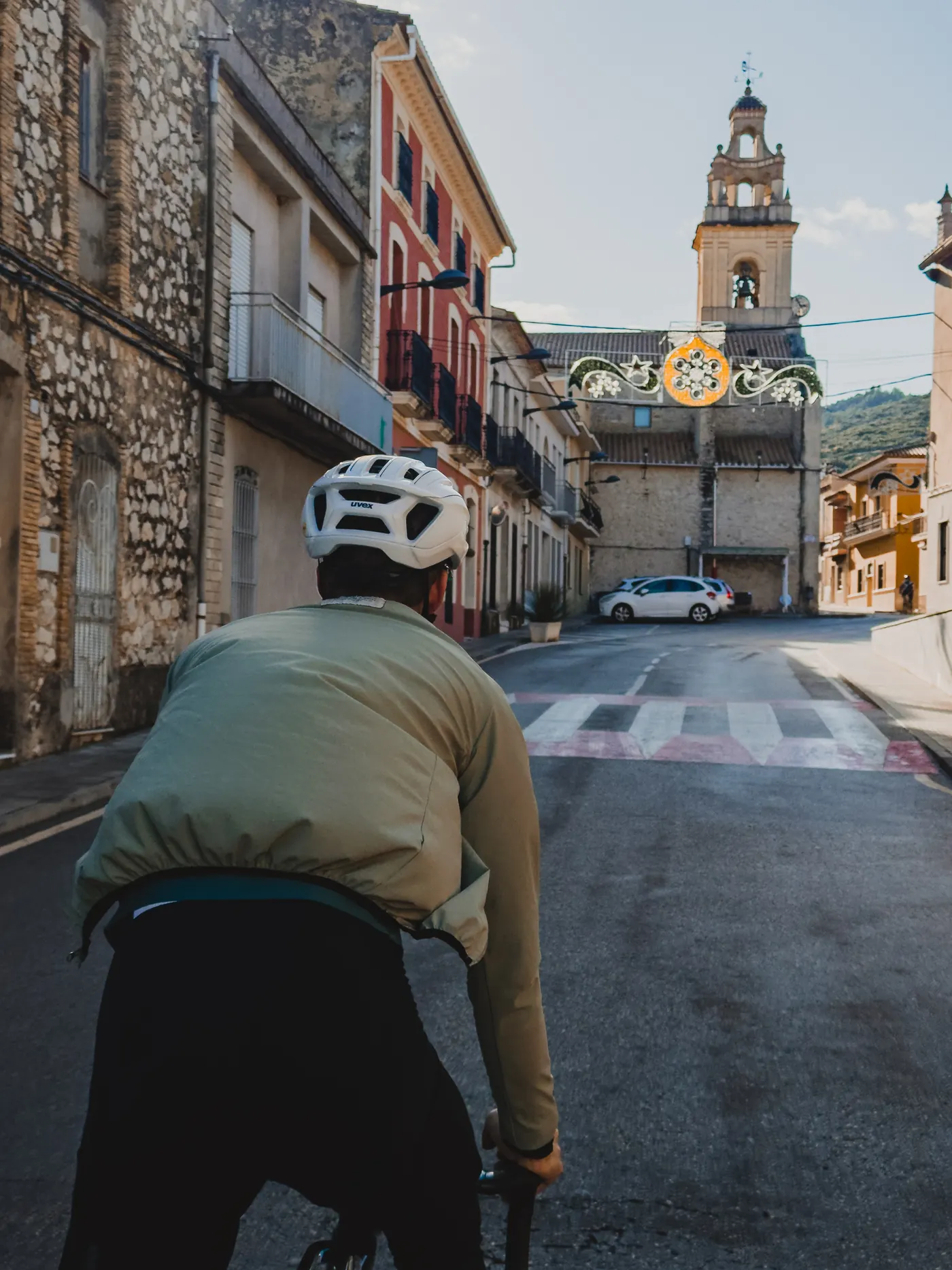
Setting the scene at 36
At 26, a pro contract is a storyline.
At 36, it is a plot twist.
Most of your friends are optimising for stability by now. Careers are more defined, families are in motion, and the acceptable way to spend a weekend is increasingly brunch, not a five‑hour endurance ride followed by 30 minutes lying on the kitchen floor wondering if you overdid the last set. Choosing to go all‑in on racing at this age is not just a training decision; it is a statement about how seriously you are willing to take your own dreams when the world has moved on.
In 2026, that statement becomes very literal for me: I will line up as part of Girona Racing Academy, racing a road‑heavy calendar across Spain with a group of athletes who are all‑in on performance. We are building a season that treats races not as “fun extras” around life but as anchors that shape the year, the training cycles and, to a large extent, identity itself.
Ambition that grows up
Ambition at 20 is simple: go faster, win more, move up.
Ambition at 36 has more layers.
There is still the raw, slightly irrational desire to see how far the engine can go. Power is not irrelevant; it is still fun to watch numbers climb, to feel the way a proper block of threshold work settles into the legs and reappears as confidence on race day. But there is also a second track running under the surface: questions about time, trade‑offs and whether the return on investment is still worth it.
That is where ambition matures. It shifts from “I must prove I belong” to “I want to live in a way that feels honest.” The target is no longer just a contract, a category, or a results sheet; it is being able to look back in ten years and know that this version of yourself at 36 did not quietly file away what it wanted because it was inconvenient.
Grit: less heroic, more repetitive
Grit in sport often gets sold as drama: the big attack, the finish‑line collapse, the comeback story. At 36, grit looks much less cinematic and much more like an endless sequence of boring, correct decisions.
It is:
Turning up to the midweek session knowing that your training stress score is already high from work and life, and doing the session properly anyway, not heroically.
Saying no to the spontaneous late night, not because you are joyless, but because you know tomorrow’s 4 × 20 at threshold will expose every bad decision from the last 48 hours.
Accepting that fatigue sits differently in a 36‑year‑old body than in a 22‑year‑old one, and adapting instead of denying it.
Studies around “grit in sport” suggest that what matters over the long term is not one grand act of perseverance, but an accumulated tendency to stick with long‑range goals despite setbacks and boredom. That is the quiet part nobody glamorises: grit becomes less about being special and more about being relentlessly consistent.
Training with an older ego
One of the strangest parts of a late bid is how it exposes your ego.
There is the obvious ego hit: lining up next to riders a decade younger, knowing that if you go by traditional cycling logic, you missed the window. You can react in two ways: either by pretending age does not matter and overtraining to prove a point, or by accepting the reality of the physiology curve and designing your training around it.
The ego work happens in the small moments:
Letting yourself be the one who gets dropped at a training camp, and using that data as information, not as a verdict on who you are.
Asking younger teammates for advice on a race circuit you have never ridden.
Admitting that recovery is now a training discipline, not a luxury.
That shift — from ego as armour to ego as feedback — is where late‑career athletes often find a deeper, calmer kind of confidence. It is no longer about appearing invincible; it is about being coachable, adaptable and honest.
Identity: more than “the cyclist”
Pursuing a pro‑level path at 36 forces a reckoning with identity that younger riders often postpone. You cannot hide behind the “I am just trying this for a few years” narrative; if you are restructuring your life around racing now, you are doing it consciously.
Cycling becomes one identity among several:
There is the athlete who chases marginal gains, interval splits and race craft.
There is the professional who has work responsibilities and career ambitions off the bike.
There is the human who wants relationships, health and a life that is not entirely measured in watts per kilo.
Research on athletes and identity shows that anchoring your entire sense of self to performance can make transitions brutal later on. The good news about going all‑in a bit later is that you already know you are more than your results. The work is not to shrink the “athlete” part, but to integrate it so that a bad race does not feel like a bad life.
Redefining progress in your thirties
Progress at 36 is slippery. It is not a neat line.
Some weeks progress looks like peak power personal bests and race results that validate everything. Other weeks it looks like handling a heavy training load without getting sick, or navigating a stressful month of work while still turning up to key sessions with intent.
So the definition of progress evolves:
Less: “Did I win?”
More: “Did I move the project forward in a way that aligns with the life I actually want?”
Sometimes that project is obvious: a stage race on the calendar, a national series, a block of Spanish road races with Girona Racing Academy where you want to be more than just pack filler. Sometimes it is quieter: the sense that your habits, your schedule and your relationships are starting to support the athlete you are becoming, instead of constantly negotiating against them.
Building a season, building a self
Stacking a road‑heavy calendar across Spain is logistically about spreadsheets, travel, and race registrations, but psychologically it is about commitment. Every race you add to the calendar is a small promise to your future self: “I will show up there with the best preparation I can manage.”
This kind of planning changes how the year feels:
Time is no longer just months passing, it is blocks of training with purpose.
Choices around sleep, nutrition and work become less random and more aligned with those race dates.
The team becomes a mirror, reflecting back the standard you claim to want.
Riding for Girona Racing Academy in 2026 means stepping into an environment that is unapologetically performance‑focused, but also built around community and shared ambition. That combination is powerful at 36, because you know the difference between empty grind and meaningful effort.
Idealism, realism, and choosing anyway
There is an unavoidable realism to a late bid: chances are, you are not stepping into a WorldTour contract with a decade of runway. The sport has its structures, its development pathways, its obsession with youth. You know all of that. You have read the same articles, looked at the same age profiles, seen the same trend lines.
And yet, there is still idealism in deciding to step forward anyway. Not naive idealism that ignores reality, but a grounded version that says: “Even knowing the odds, I still choose to give this everything I reasonably can.” That tension between realism and idealism is where the richest lessons live.
The psychology of a late bid is not about proving everyone wrong. It is about proving something to yourself: that you are willing to live in alignment with what matters to you, even when it would be easier to quietly downgrade your dreams.
In the end, going pro at 36 is less a story about age and more a story about authorship. The calendar across Spain, the long training days, the role with Girona Racing Academy in 2026 — they are all scenes in a larger narrative about who you allow yourself to be when the script could just as easily have been “too late.”